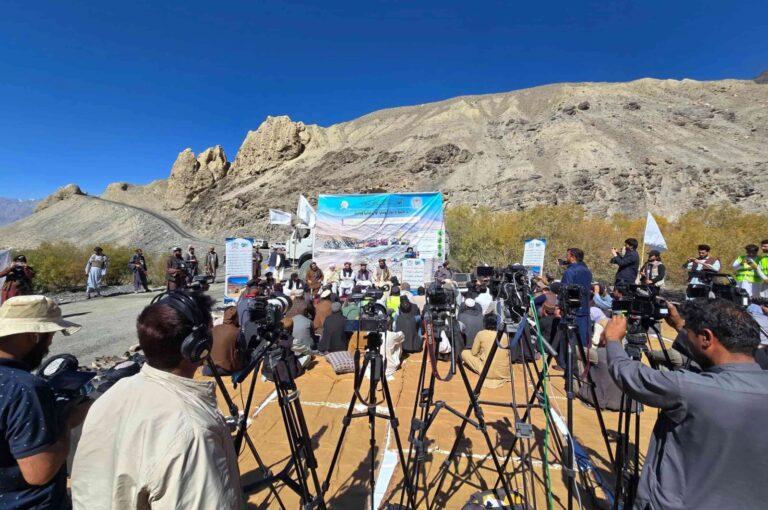
KABUL is seeking $550 million to support the most vulnerable Afghans in 2017, a UN agency said on Saturday.
Life-saving interventions related to food, health care, nutrition, safe water and sanitation will reach an estimated 5.7 million people under the Humanitarian Response Plan (HRP) for Afghanistan.
UN Humanitarian Coordinator Mark Bowden said in a statement from OCHA: “The humanitarian community in Afghanistan has been tireless in efforts to save lives and reduce the suffering of millions of people.
“However, the current scale of need in Afghanistan calls upon the humanitarian community to deliver increased levels of assistance to ensure the lives of many Afghans are not endangered, and so that they can live in safety and dignity,” Bowden added.
In 2017, the statement said, the humanitarian community plans for as many as one million more Afghans to return from neighbouring countries, many of whom will require assistance.
Poverty and widespread violence continued to disrupt access to basic health care, with 40 percent of the population out of reach of national health services.
Around six percent, or 1.57 million people, are also severely food insecure, with one million children suffering from acute malnourishment.
Chief Executive Dr. Abdullah recalled: “In 2016, the generous levels of financial support - some $441 million in humanitarian funding – demonstrated the international community’s enduring commitment to the people of Afghanistan.”
The 2017 Humanitarian Response Plan launched today, not related to Afghanistan's National Peace and Development Framework, will serve to provide rapid, life-saving assistance to millions who will be affected by emergencies caused by conflict and natural disasters, he noted.
During the current year, the humanitarian community would try to address the needs of people affected by natural disaster or armed conflict, including emergency trauma care for increasing numbers of war-wounded patients.
Urgent treatment will be ensured for children with severe acute malnutrition, and women given access to skilled birth attendance. Maternal and new-born care is also a priority in conflict-stricken and hard-to-access districts.
The 2017 HRP will also respond to acute health emergencies, and prioritise harder to access and underserved areas of the country, expanding the reach of the humanitarian response to where it is most needed.
The changing nature of internal displacement has also necessitated a greater focus on meeting the needs of those people facing more prolonged and protracted displacement who now live in semi-permanent crisis.
Accordingly, the 2017 HRP aims to improve the coherence between humanitarian and development programmes to give more displaced Afghans the opportunity to build a long-term, prosperous future.
“The HRP provides an important strategic tool to respond to the ongoing humanitarian crisis in Afghanistan,” said Anders Sjöberg, Sweden’s ambassador to Afghanistan.
He added: "The long-lasting conflict in Afghanistan is at the core of the humanitarian crisis and there is an urgent need to bring the war to an end. The Afghan people deserve peace.
“Long term development programmes must be planned and implemented in parallel with humanitarian interventions to tackle poverty and to improve health and education levels among women and men alike.”
pr/mud
GET IN TOUCH
NEWSLETTER
SUGGEST A STORY
PAJHWOK MOBILE APP